
5 Things We Did to Set Up a Montessori Playroom for Our Toddler
After moving into our home in Placerville, we decided to transform our family room into a Montessori-inspired playroom for our 2-year-old.
The family room is the first space guests see, and it had three cluttered closets filled with boxes and random storage. We wanted a space that felt calm, organized, and child-friendly — while encouraging independence, curiosity, and focused play.
Here are the five steps we took to create a simple, functional Montessori play area.
1. We Chose a Calm, Minimalist Space
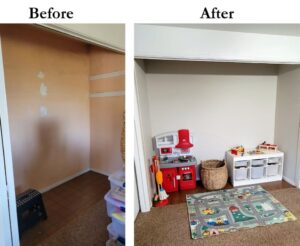
The house was already painted white inside, but the closet interiors were outdated pink with old metal shelving and doors that made the space feel cluttered.
To simplify the room, we:
-
Removed the closet doors
-
Took out the metal railing
-
Removed outdated shelving
-
Repainted the closet interiors
We chose Elmira White HC-84 by Benjamin Moore, a soft greige that contrasts gently with the bright white walls. The subtle contrast helped define the play area while maintaining a calm, neutral tone.
A Montessori playroom should feel peaceful and uncluttered. A neutral color palette helps reduce overstimulation and promotes focus.
2. We Used Low Shelves for Accessibility
One of the core principles of Montessori design is accessibility.
We added low shelving from IKEA, making toys easy for our toddler to see and reach independently. We also found a small play kitchen at a garage sale, keeping the setup budget-friendly.
Why low shelves work:
-
Encourages independent play
-
Allows children to make their own choices
-
Promotes responsibility and cleanup
-
Reduces toy dumping and overwhelm
We plan to rotate toys regularly to keep the space fresh and engaging without adding clutter.
3. We’re Gradually Switching to Natural Materials
Montessori spaces prioritize natural, tactile materials like wood, fabric, and metal over plastic.
While we still have some plastic toys, we’re slowly replacing them with:
-
Wooden toys
-
Fabric-based materials
-
Open-ended play items
Natural toys tend to be more expensive, but we’re focusing on fewer, higher-quality items instead of large quantities. This makes cleanup easier and keeps the space visually calm.
We also plan to replace plastic bins with wicker baskets for a warmer, more cohesive look. Wicker baskets are perfect for:
-
Wooden blocks
-
BRIO trains
-
Stuffed animals
-
Open-ended play materials
Less clutter = more focus and creativity.
4. We Created Defined Activity Areas
Instead of one large open toy area, we converted each of the three closets into purposeful zones:
-
Practical Life & Kitchen Area – Featuring the play kitchen and accessible drawers
-
Reading Nook – Complete with an indoor tipi to encourage quiet reading time
-
Art Space – A dedicated creative zone for drawing and hands-on projects
Defined activity areas help children:
-
Transition between tasks
-
Develop concentration
-
Understand boundaries
-
Maintain organization
A structured environment encourages independence while keeping the room tidy — especially important since this is the first room guests see.
5. We Encouraged Independence
Independence is at the heart of a Montessori playroom.
We incorporated child-sized furniture, including a small table and chair set that converts into a toddler tower. This tower allows our son to safely participate in kitchen activities — like helping make cookies.
Next steps include:
-
Installing low wall hooks in his bedroom
-
Creating accessible clothing storage
-
Continuing to adapt spaces at his height
When children can reach what they need, they naturally build confidence, responsibility, and self-motivation.
Why a Montessori Playroom Is Worth It
Creating a Montessori-inspired playroom in your family space:
-
Reduces clutter
-
Promotes independent play
-
Encourages focus and creativity
-
Keeps shared spaces organized
-
Builds lifelong habits of order and responsibility
You don’t need a huge budget to start — just intentional design, simplicity, and a willingness to declutter.